
Your digital sovereignty. Made safe.

Multi-Node Backup - your data never sails on just one ship.

It's not security that protects you - it's your recoverability. The groupios Multi-Node Backup architecture eliminates central weak points: data is broken into encrypted fragments and distributed across multiple independent nodes. No single location holds complete data - no attack can destroy everything.

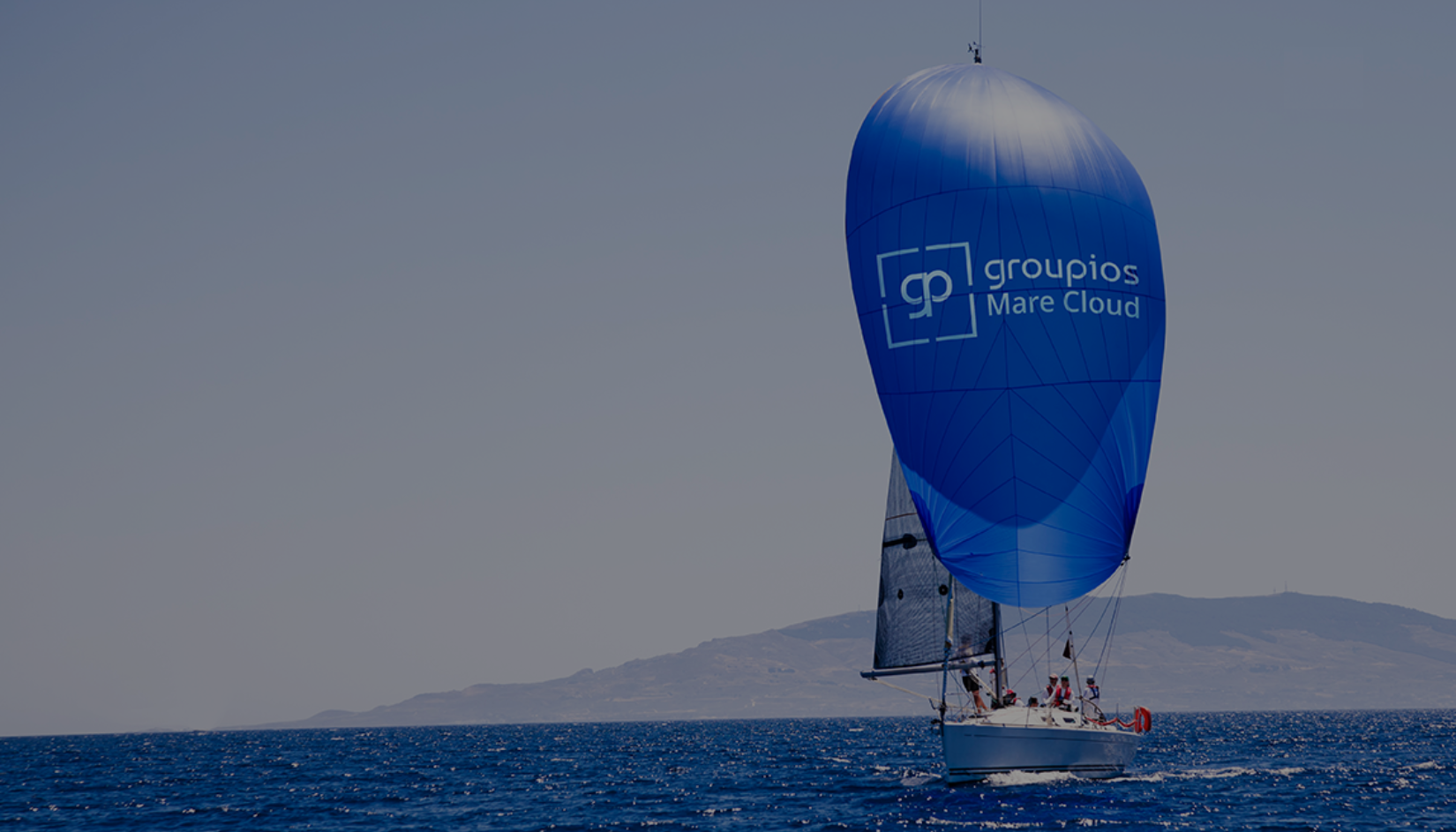
Multiple sailboats at sea - a symbol for distributed, independent data nodes

The central problem

Classic backup concepts fail - because the backup itself becomes the risk.

Classic backup concepts fail - because the backup itself becomes the risk. Central backup systems convey a sense of security - but they're a critical risk themselves. One successful attack, one system failure, or one compromised access point is enough to lose access to all data completely. Attackers target backup systems: Professional attackers know: whoever compromises the central backup has won. Central systems are a precise, predictable target - and are attacked deliberately. Ransomware hits the backup itself: Ransomware doesn't just attack production systems - it also targets complete backup repositories. A central backup is therefore a significant central risk. Outages affect entire infrastructures: If the central backup system fails - due to a hardware defect, fire, or flooding - all data is affected at once. Recovery is delayed or impossible. Recovery too slow: Even when the central backup is intact: recovering large data volumes from a single system takes hours or days - business-critical time. If your backup can be attacked, it isn't a backup - it's a risk: a single point of failure can shut down your entire company. Classic backup concepts are no longer equal to these dynamic risks. KI generiert

Multi-Node Backup: distributed data protection with no single point of failure.

Multi-Node Backup is a distributed backup architecture in which data is broken into encrypted fragments and distributed across multiple independent storage nodes. This creates no single point of failure - no single attack or outage can compromise all data fragments at once. Instead of placing a central backup in one location, groupios creates genuine resilience through data splitting, distribution, and recoverability. Your data is broken into small encrypted segments and redundantly distributed across many independent units - for maximum security and fast, reliable recovery in an emergency. The result: maximum resilience, full control, at a security level that clearly surpasses classic backup concepts. Uncompromising - your data integrity remains intact even during attacks or outages. Classic backup is yesterday's approach - with groupios comes genuine resilience: a backup architecture with no central points of attack, that stays stable even during outages, and ensures maximum data integrity. Fragmentation including encryption, Distribution across independent nodes, No single point of failure, WORM principle on all fragments, Encryption at rest, Automatic failover between nodes. KI generiert

The architecture

Multi-Node vs. classic backup: security is a question of architecture.

Multi-Node vs. classic backup: security is a question of architecture. No location holds complete data - no attack can destroy everything. groupios consistently distributes your data across multiple independent storage nodes - for a security level classic backup systems can't reach. Classic backup: Central storage, Single point of failure, Complete data exposed to attack, One attack, total loss, Central backup outages. groupios Multi-Node: Distributed node architecture, No central weak points, Fragmented & encrypted, No complete dataset anywhere, Distributed systems stay stable. Security isn't a promise - it's a question of architecture. Multi-Node Backup delivers a security level classic backup systems can't reach. KI generiert

Your benefits at a glance

The benefits of groupios's Multi-Node Backup architecture

groupios consistently distributes your data across multiple independent storage nodes - for maximum resilience and full control.

Maximum failure resistance

If one system fails, other nodes automatically take over storage and availability of the data. This distributed backup architecture ensures your data stays protected even under difficult conditions. No outage affects all stored data at once.
Maximum resilience against attacks

Splitting and distributing the data creates a particularly resilient backup structure. Ransomware, cyberattacks, and infrastructure outages can no longer compromise a complete dataset. That's what real security looks like! No single attack can trigger a total outage.

Integrated security mechanisms

The groupios Multi-Node Backup architecture combines multiple security mechanisms: the WORM principle on all fragments (unalterable) and encryption at rest for the highest possible data protection - for ultimate protection. Maximum security through technical design.

Data fragmentation and encryption

In the groupios Multi-Node Backup architecture, data is broken into small encrypted segments and redundantly distributed across many units. No single node holds complete data - so no attacker can access all the data. Fragmented & protected at every node.

GDPR-compliant, made in Germany

GDPR-compliant processing, protection from ransomware, and no loss of control over your data - with no black box. Operated on German infrastructure, with no CLOUD Act, no US access. Made in Germany means real security.

Fast recovery in an emergency

Parallel availability across multiple nodes makes recovery fast and reliable in an emergency. Companies stay operational - even during the total failure of one location. Recoverability is the real protection.

Multi-Node Backup from groupios - for organizations where outages aren't an option.

The groupios Multi-Node Backup architecture is deployed wherever maximum security and availability are business-critical.

Critical infrastructure operators

Energy, water, health, transport - critical infrastructure operators need backup solutions that stay stable even under attack. Multi-Node Backup is designed exactly for that.

Financial sector

Banks, insurers, and financial service providers with the highest regulatory requirements for data availability, integrity, and data sovereignty.

Public authorities & administration

Cities, municipalities, and federal authorities that rely on sovereign, tamper-proof data protection - with no dependency on US providers.

Regulated industries

Pharmaceutical companies, law firms, engineering offices, and other organizations with the highest requirements for compliance, data protection, and business continuity.

Made in Germany stands for real security.

GDPR-compliant processing, protection from ransomware, and no loss of control over your data - with no black box.

groupios operates the Multi-Node Backup architecture exclusively on German infrastructure.

That means: German and European law, no CLOUD Act, no opaque processes - and a point of contact who speaks your language.

Act now - here's why

Attacks are becoming more targeted, systems more complex - classic backups are no longer enough.

Four developments make distributed Multi-Node Backup architecture a strategic necessity.

Targeted

Attacks are becoming more targeted and more sophisticated. Professional threat actors systematically target central backup systems - because they know it's the most effective approach.

Complex

Systems are becoming more complex, attack surfaces larger. Central backup structures are no longer equal to these dynamic risks and become a critical weak point themselves.

Costly

Downtime and data loss have an increasingly business-critical impact - economically, regulatorily, and reputationally. Every hour of downtime costs money.

Geopolitics

Economic uncertainty and geopolitical developments put pressure on the stability of infrastructure. Resilience is no longer a nice-to-have - it's a requirement.

Anyone relying on classic backups today risks total loss of control over their data in an emergency. Central backup structures are no longer equal to dynamic risks. The solution is architecture - not just a promise of security.

Frequently asked questions about groupios's Multi-Node Backup architecture

What is Multi-Node Backup

Multi-Node Backup is a distributed backup architecture in which data is broken into encrypted fragments and distributed across multiple independent storage nodes. This creates no single point of failure - no single attack or outage can compromise all data fragments at once. groupios Multi-Node Backup offers maximum resilience against ransomware, cyberattacks, and infrastructure outages - WORM-secured, GDPR-compliant, made in Germany.

Why do I need a Multi-Node Backup architecture?

Central backup systems represent a single point of failure. One successful attack, one system failure, or one compromised access point is enough to lose access to all data completely. A multi-node architecture distributes data across multiple independent nodes - no location holds complete data, and no attack can destroy everything.

What distinguishes Multi-Node Backup from classic backup solutions?

Classic backups store data centrally and are therefore vulnerable to attacks and outages - a single point of failure. Multi-Node Backup uses a distributed architecture with no central weak points: data is fragmented, encrypted, and distributed across multiple independent systems. This achieves significantly higher failure resistance and data resilience than classic concepts can offer.

How exactly does Multi-Node Backup protect against ransomware?

Multi-Node Backup protects through three mechanisms: first, data is fragmented, encrypted, and distributed across multiple systems - attackers can’t obtain a complete dataset. Second, the WORM principle is applied to all fragments - data can’t be subsequently encrypted or deleted. Third, even if systems are compromised, data remains protected in independent nodes and can be recovered from them.

Is Multi-Node Backup GDPR-compliant and regulatorily compliant?

Yes. groupios Multi-Node Backup is stored and processed on controlled, European infrastructure - fully GDPR-compliant. Through traceability, access control, and clear data governance, the architecture meets the requirements of regulated industries such as critical infrastructure, finance, and public authorities. Made in Germany means: German law, no CLOUD Act, no black box.

What happens during a successful attack or a complete system outage?

Because of the distributed storage, multiple independent data fragments exist across different nodes. Neither a targeted attack nor a complete system outage can compromise all fragments at once. Data remains available and can be restored from undamaged nodes. Companies stay operational - even in a worst case scenario.

Mare Cloud brings all security solutions together in a single platform.

Combine our various building blocks for maximum data sovereignty.

Email Security Gateway

Protection from spam, malware, and ransomware – with automatic S/MIME encryption and central certificate management.

Discover the gateway

S/MIME Encryption

Legally compliant S/MIME encryption with central certificate management – automated, with no effort for users.

Discover encryption

Email Archiving

Audit-proof archiving compliant with GDPR and GoBD – legally compliant long-term storage for all your previously encrypted emails.

View archiving

Cloud2Cloud Backup

Completely vendor-independent backup, for example of Microsoft 365®, OneDrive®, Teams®, SharePoint®, Gmail®, and Google Drive®.

View backup solution

Cast off now!

Set your course in 30 seconds.

Simply fill out the form to get started - we usually get back to you within one business day with a concrete offer or an appointment for your personal consultation.

  • 30-day free trial - no risk
  • No contract, no minimum term
  • Server locations exclusively in Germany
  • Response usually within one business day
  • Personal point of contact, not a call center

Prefer to talk directly?

Call now

* Required fields

Ready for digital sovereignty?

Protect communication, data and collaboration with a platform developed and operated entirely in Germany.